2026年是APEC“中国年”
“创新”被列为优先领域
各成员经济体呼吁
在人工智能和数字经济领域
达成更多共识
11月14日
英国《经济学人》刊发文章
《当AI遇见制造:常州在亚太数字合作中
扮演什么角色》
把镜头对准了江苏常州
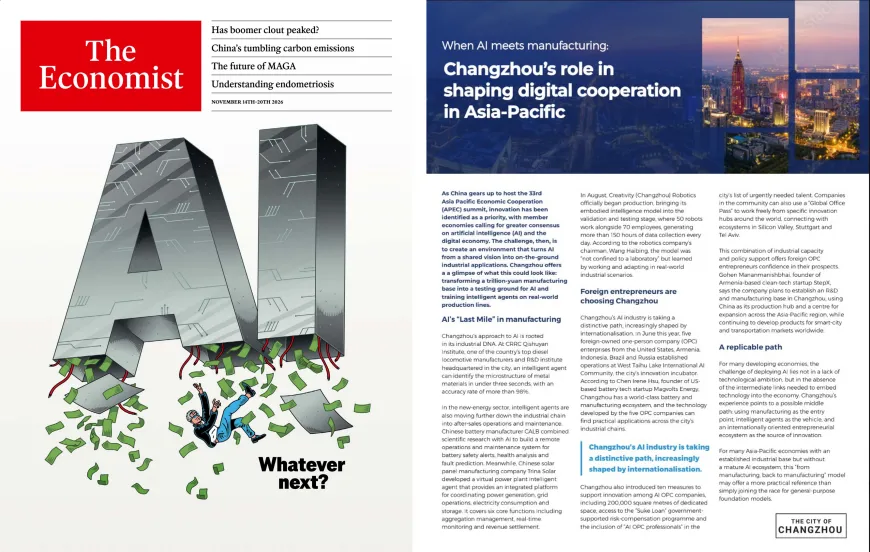
《经济学人》刊发的《当AI遇见制造》文章版面
文章给出的答案是具体的——将已有的万亿级制造业体系转化为AI技术的“试验场”,把智能体装进产线,让产线教会它如何工作。
《经济学人》(The Economist)创刊于1843年,是一份面向全球发行的新闻和商业周刊,覆盖200多个国家和地区的400多万读者,被视为全球最具影响力的政经期刊之一。此番刊文,这家老牌刊物把“中国制造”的现场写进了亚太数字合作的叙事。
文章认为,常州对AI的理解根植于其产业基因。在中车戚墅堰机车车辆工艺研究所,一款依托深度学习技术开发的“金相分析智能体”,能在1至3秒内识别金属材料的显微组织,精度达98%以上。
在新能源领域,智能体的部署正向产业链后端运维延伸:中创新航的“电池全周期售后智能体”结合机理研究与AI技术,构建起电池安全故障预警、健康分析和故障预测的远程运维体系;天合光能的“虚拟电厂智能体”搭建源网荷储一体化调控平台,覆盖聚合管理、实时监控、收益结算等六大核心功能。
更直观的场景发生在产线上。2026年8月,创造力(常州)机器人正式投产,其自主研制的首款面向工业母机应用场景的具身智能模型进入验证应用阶段,50台机器人“同事”与70名员工协同作业,每日数据采集产出总时长超过150小时。
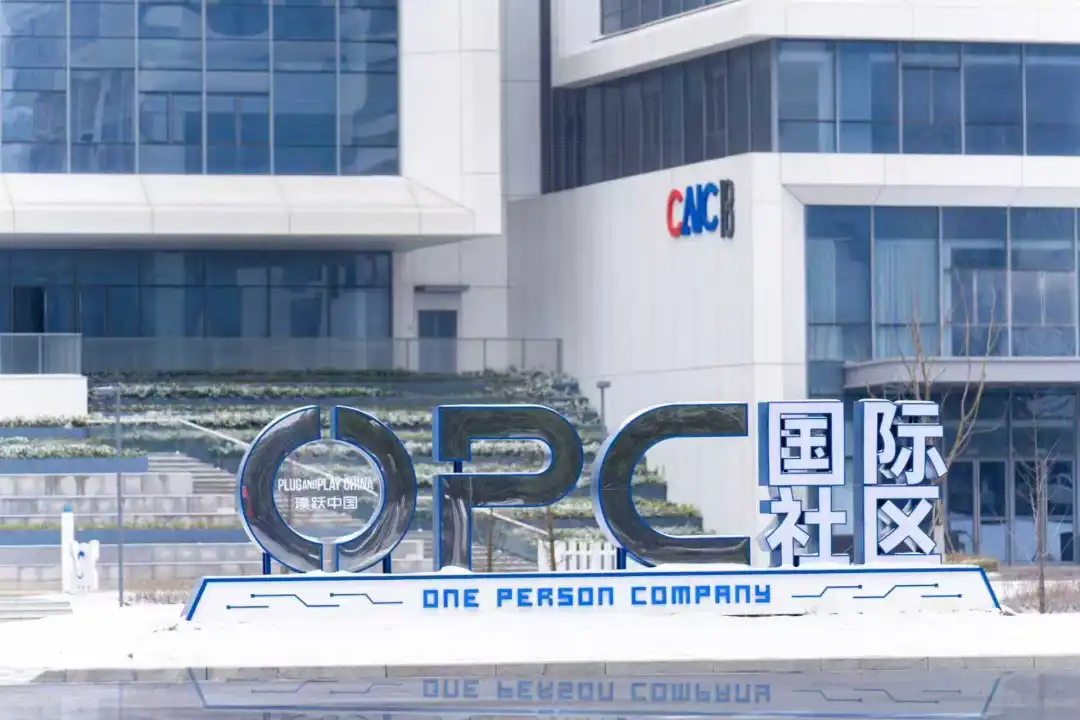
“这套模型不是实验室‘憋’出来的,而是让机器人在真实场景中边干边学出来的。”创造力(常州)机器人董事长王海兵说。
《经济学人》并未把常州描述为一座“只谈制造”的城市。2026年6月,来自美国、亚美尼亚、印尼、巴西、俄罗斯的5家外籍OPC(一人公司)企业落户西太湖(常州)人工智能国际社区。
常州出台《关于支持人工智能OPC创新发展的十条举措》,拿出20万平方米专属空间,把OPC企业纳入“苏科贷”风险补偿,在紧缺人才目录中单列“AI OPC人才”。产业场景与开放生态互为表里,共同构成这座城市的AI“土壤”。
11月18日至19日,APEC第三十三次领导人非正式会议在深圳举行,数字经济与人工智能被列为各方期待取得务实成果的重点领域。
今年以来,常州加快把制造业场景转化为AI应用场景:1月,2026全国智能体开发者大会在常州举办,50亿元人工智能专项基金落地,全国“智能体+场景应用”示范城市建设全面启动;6月,《常州市推动“人工智能+制造”三年行动方案(2026—2028年)》印发,明确到2028年人工智能核心产业规模突破400亿元、智能算力规模超3000PFLOPS。
《经济学人》认为,常州以制造业场景为入口、以智能体为载体、以国际化创业生态为来源的实践,为亚太发展中经济体跨越AI落地的“最后一公里”提供了一条可复制的中间路径。
这场起于车间、成于产线的人工智能实践,也将成为亚太人工智能赋能实体经济的最好例证。
【中译全文】
当AI遇见制造:常州在亚太数字合作中扮演什么角色
2026年APEC“中国年”将“创新”列为优先领域,提出在人工智能和数字经济领域达成更多共识。7月在成都举办的APEC数字和人工智能部长会议通过了《成都声明》,共同推动数字和人工智能技术赋能亚太共同体。
一个值得关注的问题是:人工智能从共识走向产业落地,究竟需要什么样的土壤?常州提供了一个具体答案——将已有的万亿级制造业体系转化为AI技术的“试验场”,把智能体装进产线,让产线教会它如何工作。
AI嵌入制造的“最后一公里”
常州对AI的理解,根植于其产业基因。中车戚墅堰机车车辆工艺研究所开发的“金相分析智能体”,依托深度学习技术,能在1至3秒内识别金属材料显微组织,精度达98%以上。在新能源领域,智能体的部署进一步延伸到产业链的后端运维。中创新航的“电池全周期售后智能体”结合机理研究与AI技术,构建了电池安全故障预警、健康分析和故障预测的远程运维体系。天合光能的“虚拟电厂智能体”则搭建起源网荷储一体化调控平台,覆盖聚合管理、实时监控、收益结算等六大核心功能。
2026年8月,创造力(常州)机器人正式投产,全球首款面向工业母机应用场景的具身智能模型进入验证应用阶段。50台机器人“同事”与70名员工协同作业,每日数据采集产出总时长超过150小时。创造力(常州)机器人董事长王海兵说,这套模型不是实验室“憋”出来的,而是让机器人在真实场景中边干边学出来的。
外籍创业者为何选择常州
AI产业的国际化,在常州走出一条新路。2026年6月,来自美国、亚美尼亚、印尼、巴西、俄罗斯的5家外籍OPC企业落户西太湖(常州)人工智能国际社区。美国Magvolts Energy创始人Chen Irene Hsu说,常州拥有世界级的电池和制造生态系统。五家外籍OPC的技术方向,几乎都能在常州的产业链上找到“用武之地”。
同时,常州出台《关于支持人工智能OPC创新发展的十条举措》,拿出20万平方米专属空间,把OPC企业纳入“苏科贷”风险补偿,在紧缺人才目录中单列“AI OPC人才”。此外,入驻企业可凭“全球办公通行证”,在全球创新中心自由办公,随时链接硅谷、斯图加特和特拉维夫。
良好的产业和政策,让外国OPC创业者对未来充满信心。亚美尼亚StepX公司创始人GOHEL MANANMANISHBHAI表示,“我们将在常州建立研发和制造基地,将中国作为生产和亚太地区扩张的中心,同时继续为全球智能城市和交通市场开发产品。”
一种可复制的亚太路径?
对于许多发展中经济体而言,AI的落地困境往往不在于缺乏技术愿景,而在于缺乏将技术嵌入实体经济的中间环节。
常州的实践指向了一种中间路径:以制造业场景为入口,以智能体为载体,以国际化创业生态为来源。对于亚太地区众多拥有一定工业基础但尚未建立AI生态的经济体而言,这种“从制造中来,到制造中去”的模式,或许比追逐通用大模型的竞赛更具参考价值。
【英文原文】
When AI Meets Manufacturing: What Role Does Changzhou Play in Asia-Pacific Digital Cooperation?
In 2026, as China hosts the “APEC Year of China,” innovation has been identified as a priority, with APEC members calling for greater consensus in artificial intelligence and the digital economy. In July, the APEC Ministers Responsible for Digital and Artificial Intelligence held a meeting in Chengdu and adopted the Chengdu Declaration, jointly promoting the use of digital and AI technologies to empower the Asia-Pacific community.
But an important question remains: what kind of environment is needed to turn AI from shared consensus into industrial applications? Changzhou offers a concrete answer: turn its trillion-yuan manufacturing base into a testing ground for AI, put intelligent agents on production lines, and let those production lines teach them how to work.
AI’s “Last Mile” in Manufacturing
Changzhou’s approach to AI is rooted in its industrial DNA. At CRRC Qishuyan Institute Co., Ltd., an intelligent metallographic analysis agent developed using deep-learning technology can identify the microstructure of metal materials within 1–3 seconds, with an accuracy rate of more than 98 percent. In the new-energy sector, intelligent agents are also moving further down the industrial chain into after-sales operations and maintenance. CALB has developed a battery full-life-cycle after-sales intelligent agent that combines scientific research into battery mechanisms with AI technology to build a remote operations and maintenance system for battery safety alerts, health analysis and fault prediction. Trina Solar’s virtual power plant intelligent agent, meanwhile, provides an integrated platform for coordinating power generation, grid operations, electricity consumption and energy storage, covering six core functions including aggregation management, real-time monitoring and revenue settlement.
In August 2026, Creativity (Changzhou) Robot officially began production, bringing the world’s first embodied-intelligence model designed for industrial machine-tool applications into the validation and testing stage. Fifty robots work alongside 70 employees, generating more than 150 hours of data collection every day. Wang Haibing, chairman of Creativity (Changzhou) Robot, says the model was not “confined to a laboratory,” but learned by working and adapting in real-world industrial scenarios.
Why Are Foreign Entrepreneurs Choosing Changzhou?
The internationalisation of Changzhou’s AI industry is taking a distinctive path. In June 2026, five foreign-owned OPC companies from the United States, Armenia, Indonesia, Brazil and Russia established operations at the West Taihu Lake (Changzhou) International AI Community.
Chen Irene Hsu, founder of US-based Magvolts Energy, says Changzhou has a world-class battery and manufacturing ecosystem. The technology developed by the five foreign OPC companies, she notes, can find practical applications across Changzhou’s industrial chains.
The city has also introduced ten measures to support innovation among AI OPC companies. These include 200,000 square metres of dedicated space, access to the “Suke Loan” risk-compensation programme, and the inclusion of “AI OPC professionals” in the city’s list of urgently needed talent. Companies based in the community can also use a “Global Office Pass” to work freely from innovation centres around the world, connecting with ecosystems in Silicon Valley, Stuttgart and Tel Aviv.
This combination of industrial capacity and policy support is giving foreign OPC entrepreneurs confidence in their prospects. GOHEL MANANMANISHBHAI, founder of Armenia-based StepX, says the company plans to establish an R&D and manufacturing base in Changzhou, using China as its production hub and a centre for expansion across the Asia-Pacific, while continuing to develop products for smart-city and transportation markets worldwide.
A Replicable Asia-Pacific Path?
For many developing economies, the challenge of deploying AI lies not necessarily in a lack of technological ambition, but in the absence of the intermediate links needed to embed technology into the real economy.
Changzhou’s experience points to a possible middle path: using manufacturing scenarios as the entry point, intelligent agents as the vehicle, and an internationally oriented entrepreneurial ecosystem as the source of innovation. For many Asia-Pacific economies with an established industrial base but without a mature AI ecosystem, this “from manufacturing, back to manufacturing” model may offer a more practical reference than simply joining the race for general-purpose foundation models.
来源:常州发布
|

